Pay in installments of $5.06 with
 ,
,
 and
and

Shipping Estimate
USA
- USA
- CAN
- USA
- CAN
Ships within 48 hours · Estimated delivery Jul 16 - Jul 21
 Promo Codes Available:
For Your Every Summer RSVP, with Code: SUMMER15
Description
iris lily flower Buy Bicolor Iris Yellow Phoenix, AZ | Dietes bicolorPhoenix's Most Exotic Yellow Flowering Iris Bicolor Iris Bicolor Iris (Dietes bicolor), also known as the Yellow Wild Iris or Peacock Flower, is one of the most striking and exotic looking perennials available for Phoenix Valley landscapes. Its cheerful, butter yellow flowers adorned with bold brown or maroon markings bloom prolifically from spring through fall, repeatedly opening fresh blossoms above tall, sword like green foliage that remains
Phoenix's Most Exotic Yellow Flowering Iris — Bicolor Iris
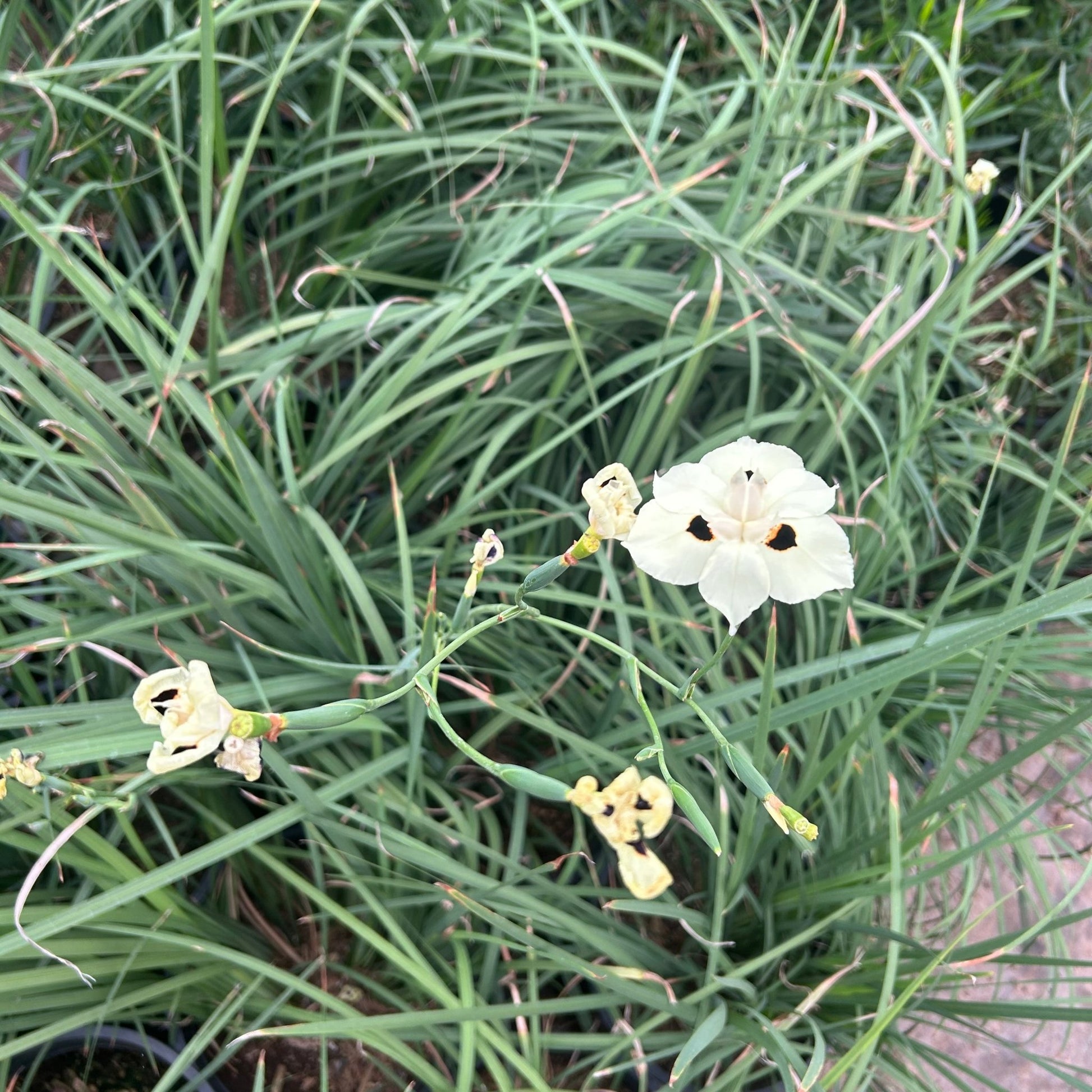
Bicolor Iris (Dietes bicolor), also known as the Yellow Wild Iris or Peacock Flower, is one of the most striking and exotic-looking perennials available for Phoenix Valley landscapes. Its cheerful, butter-yellow flowers adorned with bold brown or maroon markings bloom prolifically from spring through fall, repeatedly opening fresh blossoms above tall, sword-like green foliage that remains attractive year-round. Native to South Africa, this tough, clumping perennial thrives in Phoenix's heat and drought conditions once established. Whether you're adding a bold flowering accent to a border in Scottsdale, creating a low-maintenance poolside display in Chandler, or brightening a shaded corner in Mesa — Bicolor Iris brings months of color with almost no effort.
Bicolor Iris Plant Details
| Attribute | Detail |
|---|---|
| Scientific Name | Dietes bicolor |
| Common Names | Bicolor Iris, Yellow Wild Iris, Peacock Flower, African Iris |
| Mature Height | 2–3 feet (foliage); flowers rise slightly above |
| Mature Width | 2–3 feet per clump |
| Growth Rate | Moderate — establishes and fills in within 1–2 seasons in Phoenix |
| Sun | Full sun to partial shade. Performs well with afternoon shade in Phoenix's peak summer heat. |
| Water | Low once established. Highly drought-tolerant for a flowering perennial. |
| USDA Zones | 8–11 (Phoenix is Zone 9b–10a) |
| Soil | Adaptable. Tolerates Arizona caliche soils — break hardpan for best root development. |
| Foliage | Evergreen — upright, sword-like dark green leaves year-round |
| Bloom Color | Bright yellow with brown/maroon markings at the center |
| Bloom Season | Spring through fall (heaviest in spring and again in fall) |
| Pool Friendly | Yes — tidy, non-invasive clumping habit with minimal litter |
Bicolor Iris Uses in Phoenix Landscapes
Colorful Flowering Border Accent
Bicolor Iris is a star performer in Phoenix Valley borders, where its long bloom season and bold yellow flowers provide months of color from spring through fall. Its upright, fountain-like foliage form makes it an excellent structural element at the back or middle of mixed borders in Glendale and Tempe. Plant in groups of 3–5 at 2–3 foot spacing for a massed, dramatic display, or use as individual accents paired with purple Ruellia or Texas Sage for complementary color contrast.
Pool-Friendly Landscaping
With its tidy, clumping form and minimal leaf drop, Bicolor Iris is one of the best choices for pool-adjacent planting in the Phoenix Valley. Its bold flowers and clean, upright foliage create an elegant, tropical look around pool areas in Peoria and Scottsdale without creating excessive debris. Space plants 2–3 feet from pool edges for the best visual effect while keeping pool maintenance minimal.
Shade and Part-Shade Gardens
Unlike many flowering perennials that require full sun, Bicolor Iris tolerates partial shade beautifully — making it an excellent choice for the north-facing sides of homes, under open tree canopies, or in areas with afternoon shade throughout Gilbert and Chandler. In part shade, flowering may be slightly reduced, but the bold, architectural foliage remains excellent year-round.
Low-Maintenance Groundcover Mass
When planted in masses at 18–24 inch spacing, Bicolor Iris creates a dense, weed-suppressing groundcover with seasonal color that needs minimal upkeep once established. This makes it ideal for large planting areas, commercial landscapes, and HOA common areas throughout the Phoenix Valley where low-water, low-maintenance solutions are essential.
Best Time to Plant Bicolor Iris in Phoenix
Fall (October–November) is the ideal planting window for Bicolor Iris in Phoenix. Warm soil temperatures encourage rapid root establishment while cooler air eliminates transplant stress, giving plants 6–8 months of prime growing conditions before their first Phoenix summer. Spring (February–April) is the second-best window — plants establish before the heat and typically flower the same season. Avoid summer planting if possible; Bicolor Iris can be planted in summer with extra attention to watering and afternoon shade, but fall planting consistently produces stronger plants.
How to Plant Bicolor Iris
- Dig wide, not deep — Dig a hole 2–3 times the root ball width at the same depth. Keep the crown at soil level — never bury the crown or it may rot.
- Check for caliche — Break through any caliche hardpan with a breaker bar to ensure proper drainage. Standing water will damage this plant's roots.
- Backfill with native soil — Native Arizona soil is fine; adding 20–30% compost improves performance in full-sun and sandy locations.
- Spacing — 2–3 feet apart for border plantings; 18–24 inches for dense groundcover mass plantings.
- Water basin — Build a 3–4 inch soil ring around the plant to direct water to the root zone during establishment.
- Mulch — Apply 2–3 inches of bark or gravel mulch around the clump (not over the crown) to retain moisture and moderate soil temperature.
Watering Bicolor Iris in Phoenix
First Year Watering Schedule
- Weeks 1–2: Every 1–2 days, deep and slow (20–30 minutes per session)
- Months 1–2: Every 3–4 days
- Months 3–6: Every 7–10 days (every 5–7 days during peak summer heat)
- After Year 1: Every 10–14 days in summer; every 3–4 weeks in winter
Drip Irrigation
Place 1–2 GPH drip emitters 12–18 inches from the base of each clump. Bicolor Iris benefits from deep, infrequent irrigation rather than frequent shallow watering. Once fully established, it's remarkably drought-tolerant — established plants in Phoenix can survive weeks without supplemental irrigation in winter and spring, though regular summer watering produces better flowering.
How fast does Bicolor Iris grow in Phoenix?
Bicolor Iris grows at a moderate pace, reaching its mature 2–3 foot size within 1–2 growing seasons in Phoenix. Once established, clumps gradually expand outward and can be divided every 3–5 years to create new plants. Dividing in fall produces the best results in the Phoenix climate.
How long does Bicolor Iris bloom in Phoenix?
Bicolor Iris is one of the longest-blooming perennials in the Phoenix Valley — individual flowers last only one day, but the plant produces them in continuous succession from spring through fall. Bloom is heaviest in spring (March–May) and again in fall (September–November), with lighter blooming continuing through summer even in Phoenix's peak heat.
Does Bicolor Iris need deadheading?
No deadheading is required — spent flowers drop cleanly and new buds appear continuously along the same flowering stems. Do not cut off the flower stalks prematurely; Bicolor Iris continues to produce new flowers on established stalks throughout the season. Remove old stalks only when they brown completely at the base.
Is Bicolor Iris drought-tolerant in Phoenix?
Yes — once established (typically after the first full growing season), Bicolor Iris is genuinely drought-tolerant and well-suited to Phoenix's arid climate. It's far more drought-tolerant than traditional iris varieties, making it an excellent choice for water-wise desert landscapes throughout Scottsdale, Mesa, and Chandler.
Can Bicolor Iris grow in full shade in Phoenix?
Bicolor Iris tolerates partial shade well but needs at least 4–6 hours of direct sunlight daily for best flowering. In deep shade with less than 4 hours of sun, the plant will remain healthy but produce fewer flowers. Full sun to afternoon shade is the optimal exposure for maximum blooms in the Phoenix Valley.
You May Also Like
Giant Lily Turf — A bold, evergreen groundcover with lavender-purple flower spikes that creates a beautiful color complement to Bicolor Iris's yellow blooms in mixed plantings.
Silvery Sunproof Liriope — A variegated liriope with green and yellow striped leaves that pairs perfectly with Bicolor Iris's upright foliage for layered texture.
Little Rev Flax Lily — A compact flax lily with rich purple foliage that provides a stunning color contrast against Bicolor Iris's bright yellow flowers.
Purple Fountain Grass — A dramatic ornamental grass with deep burgundy foliage that creates a bold color and textural contrast when planted alongside Bicolor Iris.
Mexican Thread Grass — A delicate, airy grass whose fine golden foliage creates a soft, flowing contrast to Bicolor Iris's structured, upright form.
How Many Bicolor Iris Do I Need?
Bicolor Iris forms a clump 2 to 3 feet wide. For a dense, weed-suppressing mass, space clumps about 2 feet on center; for an airier border, use 3 feet. The guide below uses 2-foot spacing:
| Bed area | Clumps needed (2 ft spacing) |
|---|---|
| 20 sq ft | 5 clumps |
| 50 sq ft | 13 clumps |
| 100 sq ft | 25 clumps |
| 200 sq ft | 50 clumps |
For an accent grouping, plant in odd numbers of 3 or 5 about 2.5 feet apart so each fan of foliage reads cleanly.
Bicolor Iris Season-by-Season in Phoenix
- Spring (Feb to Apr): Heaviest bloom of the year, with fresh yellow flowers opening in daily succession. A strong second planting window.
- Summer (May to Sep): Lighter blooming continues through extreme heat. It performs best with afternoon shade in the hottest months and appreciates steady water; the upright foliage stays clean year-round.
- Fall (Oct to Nov): A second heavy bloom flush and the prime planting season. Warm soil plus cool air give roots a fast start.
- Winter (Dec to Jan): Stays evergreen for year-round structure. Hardy to about 15 degrees, well below typical Valley lows, so frost protection is rarely needed.
At a Glance
✔ Heat-Loving (Reflected-Heat Tolerant) ✔ Drought-Tolerant ✔ Evergreen ✔ Pool-Friendly (Low-Litter) ✔ Low-Maintenance ✔ Cold-Hardy to 15°F
Plant It With
- Giant Lily Turf: lavender-purple flower spikes that complement the yellow blooms in a mixed bed.
- Little Rev Flax Lily: upright blue-green blades that echo the iris foliage with a finer texture.
- Lily Turf: a low grassy groundcover that knits the planting together at the base.
- Red Yucca: coral bloom stalks and a tough, low-water habit for contrast and height.
Is Bicolor Iris Right for Your Yard?
Bicolor Iris thrives in full sun to afternoon shade, in caliche or amended soil that drains, on low water once established. It is ideal for borders, mass plantings, and tidy poolside beds. It is not a fit in deep shade, where bloom drops off sharply, or in soggy beds, where the crown is prone to rot.
Shipping Notes
- Free Standard Shipping on $100+ Orders to the USA.
- Except Preorder products are shipped in 48 hours.
- Delivery to the USA:
- Standard Shipping : 3-10 business days
- If time is of the essence, please consider selecting expedited delivery for faster service.
Exchange/Return Notes
- We offer a 30-day return/exchange service after receiving.
- Final sale items are not eligible for returns or exchanges.
- To process your return/exchange, please contact us at [email protected]
- Please click here for more details>>> Return & Exchange Policy