Shipping Estimate
USA
- USA
- CAN
- USA
- CAN
Ships within 48 hours · Estimated delivery Jul 11 - Jul 16
 Promo Codes Available:
For Your Every Summer RSVP, with Code: SUMMER15
Description
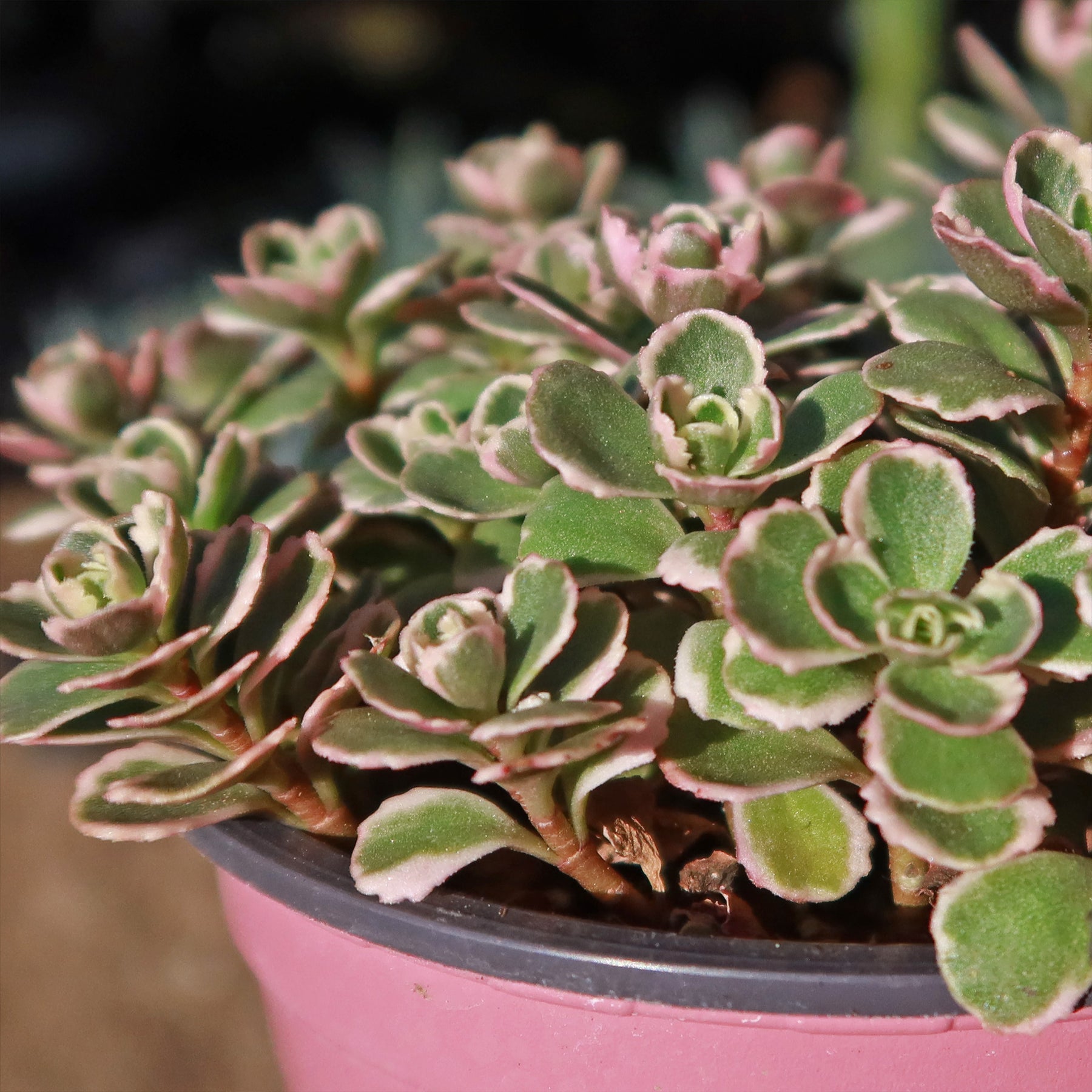
tricolor succulent Buy 'Sedum Spurium Tricolor' OnlineIntroducing the Sedum spurium Tricolor, a beautiful and eye catching succulent plant that belongs to the genus Sedum. Tricolor sedum has many other common names such as Caucasian stonecrop 'Tricolor', Two row Stonecrop 'Tricolor', Dragon's Blood, Sedum spurium variegatum, and Phedimus spurius 'Tricolor'. The combination of the green, pink, and cream color gives this sedum plant a tricolor appearance, hence the name "Tricolor Sedum." The Sedum name
Introducing the Sedum spurium Tricolor, a beautiful and eye-catching succulent plant that belongs to the genus Sedum. Tricolor sedum has many other common names such as Caucasian stonecrop 'Tricolor', Two-row Stonecrop 'Tricolor', Dragon's Blood, Sedum spurium variegatum, and Phedimus spurius 'Tricolor'.
The combination of the green, pink, and cream color gives this sedum plant a tricolor appearance, hence the name "Tricolor Sedum." The Sedum name comes from the Latin word "sedeo," meaning to sit, referring to its general growing habit of sitting and sprawling over rocks.
Native to the Caucasus, the tricolor sedum is a low-growing, sprawling, mat-forming plant that is commonly grown as ground cover and grows up to 24 inches wide.
The tricolor sedum is an evergreen plant with thick, obovate, flattened variegated leaves that are medium green with reddish-tinged margins. The lower stem leaves are deciduous, while newer ones are evergreen and turn deep burgundy in fall. These leaves are arranged in tight clusters, creating a dense and compact growth habit. When it's cold outside, the foliage of Sedum 'Tricolor' turns red. The combination of colors adds a lovely touch to any garden or indoor space.
The flowers of Sedum spurium tricolor bloom in clusters of small, star-shaped flowers that come in various shades of pink, red, or even white. These charming blooms appear during the late spring to mid-summer months, adding a burst of color to your garden. The flowers attract pollinators like bees and butterflies, making your garden a buzzing and fluttering paradise. They create a beautiful contrast against the colorful foliage, creating a stunning display.
Additionally, this Tricolor Sedum is friendly to both humans and pets. It's generally safe to have around your home or garden. However, it's always a good idea to exercise caution and keep an eye on curious pets or children around any plants, just to be on the safe side.
Watering Needs
When it comes to watering Sedum spurium Tricolor, it's important to find the right balance. This Sedum succulent is known for its drought-tolerant nature, so it doesn't require frequent watering. Overwatering can cause root rot, which can be harmful to the plant.
Allow the soil to dry out between waterings. Before giving your Sedum tricolor a drink, check the top inch of the soil. If it feels dry to the touch, that's a good indication that it's time to water. Remember, it's better to underwater than to overwater this sedum.
When it comes to water, make sure you do it thoroughly. Give your Sedum tricolor a good soaking, allowing the water to reach the roots. But be careful not to let it sit in standing water, as this can lead to root rot. Make sure the soil has proper drainage to prevent waterlogged roots.
Sedum spurium Tricolor is more active in the growing season so it may require more frequent watering during that time. However, during the dormant period or in cooler months, it will need less water. Adjust your watering schedule accordingly to the needs of your Sedum plant.
Remember, it's always better to underwater than to overwater succulents like Sedum Spurium tricolor. These succulent plants have adapted to survive in arid conditions, so they can handle periods of drought. Observing the soil moisture and adjusting your watering accordingly will help keep your sedum happy and healthy!
Light Requirements
When it comes to light requirements for Sedum tricolor, this lovely succulent thrives in bright and indirect sunlight. If growing indoors, find a spot for your Sedum spurium tricolor where it can receive at least 4-6 hours of sunlight each day. This can be a sunny windowsill or a spot in your garden that gets ample sunlight. Additionally, make sure to rotate your Sedum tricolor plant every few weeks. This will ensure that all sides of your tricolor sedum receive equal amounts of light and prevent it from leaning or growing lopsided. The more light it gets, the better it will grow and maintain its vibrant colors.
While Sedum spurium tricolor loves sunlight, it is important to protect it from direct sunlight during the hottest parts of the day when growing outdoors. This can cause sunburn or scorch the leaves. If you notice the leaves turning brown or yellow, it may be a sign that it's getting too much direct sunlight. Consider providing some shade during the hottest hours.
Remember, finding the right balance of light is key for the health and vibrancy of your Sedum spurium Tricolor. Bright and indirect sunlight is ideal, with some protection from the intense midday sun. Enjoy watching your Sedum succulent thrive in its sunny spot.
Optimal Soil & Fertilizer Needs
When it comes to choosing the right soil and fertilizers for your adorable tricolor Sedum, you need to be extra cautious and use the right kind of soil. Moisture can be a real killer, leading to root and stem rot in no time flat. But fear not, my fellow green thumbs!
Planet Desert has got your back with our specialized succulent potting mix that includes 5 natural substrates with organic mycorrhizae – perfect for promoting healthy roots and happy Sedum plants.
Natural NPK fertilizers also last longer and keep your soil alive by adding other beneficial compounds and microbes that encourage Sedum spurium tricolor plant health and nutrient absorption. So, skip those harsh chemicals and give your Sedum succulent some love with some awesome organic fertilizer once a year in spring. However, it's important not to over-fertilize your tricolor sedum spurium, as this can lead to excessive growth and reduced hardiness.
Hardiness Zone & More
When growing indoors, Sedum tricolor thrives in temperatures that range between 60-75°F. It can handle slightly cooler temperatures during the winter months, but it's best to avoid exposing it to extreme cold or hot temperatures. Keep it away from drafts and ensure it receives ample sunlight or bright indirect light indoors.
When growing Sedum spurium Tricolor outdoors, this succulent is generally suitable for zones 3-9. It can tolerate a range of climates, from colder regions with freezing temperatures to warmer areas with milder winters. Just make sure to provide protection from frost during colder months.
In terms of humidity, Sedum spurium Tricolor can tolerate a range of humidity levels, from dry to slightly humid conditions. It's important to note that succulents, including Sedum tricolor, are more susceptible to root rot in high humidity. So, make sure the soil has proper drainage to prevent waterlogged roots.
Remember, whether you're growing Sedum tricolor indoors or outdoors, providing the right temperature and humidity conditions will help it thrive. Keep an eye on the temperature and ensure proper drainage to keep your tricolor sedum succulent happy and healthy!
Propagating Sedum Tricolor
When it comes to the propagation of sedum tricolor, it is a rewarding way to expand your succulent collection. Start by selecting a healthy stem, cutting it below a leaf node, removing lower leaves, allowing the cut end to dry and callus, planting it in a well-draining potting mix, and placing it in a bright location with indirect sunlight. Then, water sparingly to prevent root rot. After a few weeks, roots should form from the cut end. Patience is key for successful propagation.
The Bottom Line
Overall, the Sedum spurium Tricolor (Two-Row Stonecrop) is a lovely tricolor sedum that belongs to the Crassulaceae family. It is a low-growing perennial with trailing stems and small, fleshy leaves that come in a variety of colors, including green, pink, and cream. This beautiful plant adds a vibrant touch to gardens, rockeries, and even containers. Sedum tricolor is known for its ability to tolerate various growing conditions, including drought and poor soil. Your tricolor sedum prefers full sun to partial shade for at least 4-6 hours daily and requires well-draining soil. With its eye-catching foliage and easy-care nature, Sedum spurium Tricolor is a popular choice among succulent enthusiasts.
Shipping Notes
- Free Standard Shipping on $100+ Orders to the USA.
- Except Preorder products are shipped in 48 hours.
- Delivery to the USA:
- Standard Shipping : 3-10 business days
- If time is of the essence, please consider selecting expedited delivery for faster service.
Exchange/Return Notes
- We offer a 30-day return/exchange service after receiving.
- Final sale items are not eligible for returns or exchanges.
- To process your return/exchange, please contact us at [email protected]
- Please click here for more details>>> Return & Exchange Policy