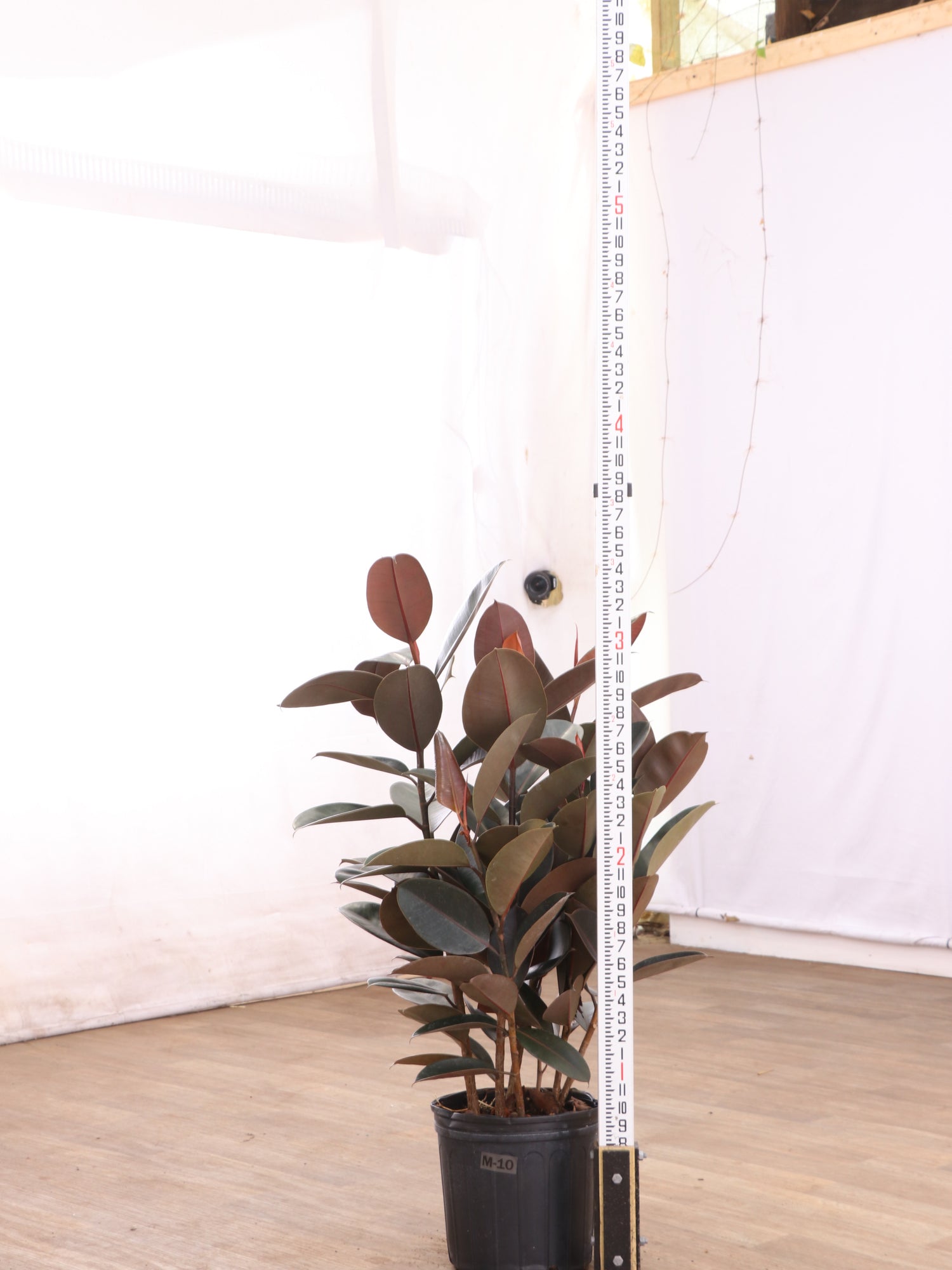
SKU: 1013377146
indoor plants rubber

indoor plants rubber Buy Large Rubber Tree Bush Online | Large Indoor Plant

Sale price$23.20 Regular price$25.78
Save 10%

Pay in installments of $6.45 with ShopPay, AfterPay and Klarna

Shipping Estimate
USA
  • USA
  • CAN

Ships within 48 hours · Estimated delivery Jul 18 - Jul 23

Promo Codes Available:

For Your Every Summer RSVP, with Code: SUMMER15

Description

indoor plants rubber Buy Large Rubber Tree Bush Online | Large Indoor PlantDescription Looking for a plant that brings authentic rainforest beauty into your home? Then we cant wait to introduce you to the magnificent Rubber Tree a stunning statement piece that will turn your space into a peaceful botanical retreat. Native to the Amazon rainforests, the Hevea brasiliensis gave the world natural latex. We're here to help you bring this tree into your home, where its impressive presence will definitely be a conversation

Description

Looking for a plant that brings authentic rainforest beauty into your home? Then we can’t wait to introduce you to the magnificent Rubber Tree - a stunning statement piece that will turn your space into a peaceful botanical retreat.

Native to the Amazon rainforests, the Hevea brasiliensis gave the world natural latex. We're here to help you bring this tree into your home, where its impressive presence will definitely be a conversation starter. With smooth bark and wonderfully glossy leaves, this beauty deserves a special (large) place in your plant collection.

Care 

Is a rubber tree a good indoor plant?

The rubber tree needs more space than many houseplants, but we believe it's absolutely worth it for the joy it brings! If you have the ceiling height, this beautiful specimen will become the heart of your room.

Are rubber trees hard to keep alive? 

Your rubber tree will thrive with consistent, loving attention to its basic needs. But it only needs regular care with steady temperatures, watering, and bright light. We promise it's not overwhelming! With our guidance, it will flourish.

This Amazonian beauty rewards dedicated care with years of green happiness, becoming a cherished part of your home and daily routine.

How often should I water a rubber plant? 

We recommend watering your rubber tree when the top 2-3 inches (5-8 cm) of soil feel dry. Think of recreating that perfect rainforest environment - consistently moist but never waterlogged. Check regularly whether it has just the right amount of moisture.

Where should I place a rubber tree in my house? 

Your rubber tree is happiest near an east- or south-facing window with bright, indirect light. We suggest avoiding direct afternoon sun, which can stress the leaves. Finding the perfect spot for your new giant friend is part of the joy! 

Can rubber tree plants live in bathrooms? 

Bathrooms can be wonderful homes for rubber trees! If your bathroom has bright light and enough space for growth, your plant will love the almost-tropical humidity. Make sure there’s proper ventilation, and you’re good to go!

What fertilizer should I use for a rubber tree? 

We recommend feeding your rubber tree with a balanced liquid fertilizer monthly during spring and summer. Think of it as providing loving nutrition for steady, healthy growth. Regular feeding helps your gentle giant plant stay strong and vibrant!

What does rubber tree plant care involve? 

Caring for your rubber tree involves providing bright indirect light, consistent moisture, regular feeding, and occasional leaf cleaning. We see plant care as being a beautiful relationship - the more attention you give, the more your plant flourishes!

Does a rubber tree need sunlight? 

Your rubber tree needs bright, indirect sunlight for at least 6 hours daily to stay healthy and happy. We always recommend filtered light similar to its rainforest home - gentle but consistent throughout the day. Direct afternoon sun can damage leaves.

Pet-friendly?

We care deeply about all family members, including pets. Unfortunately, the rubber tree isn't pet-friendly due to its latex sap containing ficin and other compounds. 

Are rubber tree plants toxic to dogs? 

Rubber trees are toxic to dogs, as their latex sap contains ficin compounds that can cause gastrointestinal upset and oral irritation. If your dog has ingested any part of your rubber tree plant, please contact your veterinarian immediately.

We're here to help you choose pet-safe alternatives if needed, ensuring both your plants and pets can coexist safely.

How toxic is a rubber plant to cats? 

The rubber tree is toxic to cats, potentially causing oral irritation, drooling, and digestive issues. If your cat has chewed on your rubber tree, please seek veterinary care right away. We understand how important pet safety is.

We can recommend beautiful cat-friendly plants that provide a similar impact while keeping your feline friends completely safe.


Factoids

What is the difference between a rubber plant and a rubber tree? 

The rubber tree (Hevea brasiliensis) is the authentic latex-producing species that grows impressively large, while the rubber plant (Ficus elastica) is its smaller ornamental cousin. We're proud to offer you the genuine rubber tree with Amazonian heritage!

Do rubber trees make rubber? 

Your rubber tree (Hevea brasiliensis) is the very species that produces commercial latex for countless products. So you're nurturing a piece of industrial history in your home - a plant that’s shaped the world (and looks great while doing it)!

Does a rubber tree purify air? 

Your rubber tree contributes to air purification through its large leaves, creating oxygen and improving humidity levels. While not the most efficient air purifier, it brings a piece of the Amazon's natural air-cleaning power into your space.

What is the lifespan of a rubber tree? 

With proper care, your indoor rubber tree can live for a truly long time, even several decades! Wild specimens can reach 100 years. We're honored to help you start this long-term relationship with a truly special gentle giant.

Do they still use rubber trees to make rubber? 

Hevea brasiliensis remains the world's primary natural rubber source, with plantations across Southeast Asia producing latex for tires, medical supplies, and so much more. It’s amazing that your houseplant shares DNA with the trees that keep the world moving.

What is the spiritual meaning of a rubber tree? 

The rubber tree symbolizes resilience, adaptability, and abundance - qualities we admire deeply. Indigenous Amazonian peoples considered it sacred because it represented the forest's generosity, while modern interpretations connect it to flexibility in life's challenges and personal growth.

Is the rubber tree fruit edible? 

The rubber tree fruit isn't edible - really they're seed capsules that explode when ripe, naturally dispersing seeds. Your indoor rubber tree rarely fruits, rather focusing its energy on producing those beautiful leaves we all love so much.


Buy a Rubber Tree

We'd love to help you welcome a magnificent rubber tree into your home! This stunning plant brings authentic Amazonian beauty and creates a truly special atmosphere in any large space. Our team is passionate about perfect matches.

Let us guide you through our video shopping experience to find your ideal rubber tree. We'll be with you every step of the way, from selection to delivery to ongoing care. Your space deserves this living piece of botanical history, and we're here to make sure it thrives under your loving care!

Shipping Notes
  • Free Standard Shipping on $100+ Orders to the USA.
  • Except Preorder products are shipped in 48 hours.
  • Delivery to the USA:
  1. Standard Shipping : 3-10 business days
  • If time is of the essence, please consider selecting expedited delivery for faster service.
Exchange/Return Notes
  • We offer a 30-day return/exchange service after receiving.
  • Final sale items are not eligible for returns or exchanges.
  • To process your return/exchange, please contact us at [email protected]
  • Please click here for more details>>> Return & Exchange Policy
SKU: 1013377146

Discover Niche Categories That Outsell indoor plants rubber

Top-Converting Item to Boost Your Average Order

4.4 ★★★★★
Based on 12 reviews
Sort
Highest Rating
Newest First
Oldest First
Product Reviews
D
Verified Purchase
Darrell Criswell
Whiting, US
★★★★★ 5
Excellent book!
Format: Paperback
I think this is a fabulous book. I have always been interested in the causes of the civil war and this book presents an interesting, almost fascinating perspective, which I havent' seen in other books. I have also been reading James Oakes fabulous "Freedom National" and the two books complement each other extremely well. McCurry's book is not of the quality that Oakes book is but not much is. I cannot understand the criticism of her writing. I find her writing to be very good...admittedly some of the sentences are too long and a few ill defined names but this is a very well written book. Although we have all studied some version of much of this material before I find it hard to believe that almost anyone won't be astonished by the magnitude of the task the confederacy was attempting to take and its inherent stupidity or maybe a better description would be craziness of these people. Good book!
WAS THIS REVIEW HELPFUL?YesReportShare
Reviewed in the United States on May 21, 2013
G
Verified Purchase
gloine36
West Palm Beach, US
★★★★★ 4
Outstanding exploration of the Confederacy's domestic divisions which helped contribute to its ultimate defeat.
Format: Paperback
This is an extremely powerful interpretation of the political forces at play in the Civil War South. Like it or not, Stephanie McCurry delivers a careful exploration of the domestic forces which were occurring during the Civil War in the Confederacy. The result is illuminating and exposes issues with great depth that have been overlooked in the study of the conflict. Much as domestic issues influenced government policies in the United States during the war as well as constantly in US history, domestic issues played an important role in influencing the actions of the Confederate government. Despite the Confederacy being an attempt to create an elite class system of rule, those without a voice in government found a way to be heard partly through their own actions, but also due to the democratic nature of American government. McCurry, the Christopher H. Browne Distinguished Professor of History at the University of Pennsylvania has definitely opened a can of worms with the release of this book. It was a finalist for the Pulitzer Prize for History in 2011 losing out to Eric Foner’s The Fiery Trial: Abraham Lincoln and American Slavery, itself a great work on the Civil War. Just how important were the actions of women and slaves in the Confederacy during the Civil War? McCurry states that their actions helped drive government policies. Based upon her work as well as others I would say she was correct. Others disagree. I think the thing to consider here is that the Confederacy, despite setting up a government ruled by the elite class of slave owners, was still responsive to the majority of the people inhabiting it. While it was an attempt to create a new nation, it was still required to adhere to some of the principles of the American Revolution. In order to establish the nation, the slave owners were going to have to wage an insurrection and for that they needed the help of the non-slave owners who would compose the majority of its armies. McCurry notes this and shows that this was just the first example of the elites compromising to achieve their goals. No matter what the elites desired, it could only happen with the support of the people in the Confederacy. It would be that support which was critical for the survival of the Confederacy. Without it, the Confederacy had no chance. This is often overlooked. First, many people think the Confederacy enjoyed the support of the people of the slave states. They did not. Of the 15 slave states in 1860, only 11 would join the Confederacy. Of those 11 states, a full third of the white men in them actually opposed secession. From the very beginning, the Confederacy had to deal with an active resistance inside its borders from whites who rejected their authority and slaves who would contribute as little as possible to the Confederate war effort. Later, soldier wives would riot as well as shield deserters. McCurry wrote extensively about these features. Just how much these factors played in the ultimate defeat of the Confederacy is going to be a guess and is open to debate. Did they cause the Confederacy to lose? Not of their own accord, but they did contribute to the defeat of the South over time. There is no doubt that the use of slaves by the Confederate armies was challenged from the very beginning of the war to the final end of it. The facts are undeniable on this matter and McCurry is not the first historian to note this nor will she be the last. The inability of the Confederacy to use its manpower to the maximum capacity was a crippling factor. The issue of slave labor and slave soldiers reflects the deep divisions within the Confederacy and exposes the rotten foundation which the slave owners tried to build their nation upon. All in all I liked the book. As some of the other comments show, the writing style could have been better. She repeated herself in multiple spots. This I think is a reflection of her still emerging writing style. Confederate Reckoning is only her second published book. She has written many articles, but those are different methods of writing compared to books. It takes some time for historians to really find their voice when writing monographs. She does have a Coursera course available, “The History of the Slave South,” which was offered in both 2014 and 2015. I think McCurry does a good job in opening up our eyes to the domestic issues on the Confederate home front. The real question which will be debated is just how much impact they had. I suspect that will be the argument for many.
WAS THIS REVIEW HELPFUL?YesReportShare
Reviewed in the United States on December 13, 2015
L
Verified Purchase
Lydia E. York
Draper, US
★★★★★ 5
Hidden History
Format: Paperback
Dr. McCurry has no dog in this fight. She is Irish by birth, and raised in Canada. However, she brings a fresh perspective to the Confederate enterprise. From its foundation to the bitter end, the life of the Confederate state is documented in the words of the people who lived it. Dr. McCurry includes all the people embraced by the Confederacy, even if they weren't considered "citizens." This includes women and the enslaved people; two thirds of the Confederacy's population. The only battles documented are the struggles of an infant state professing to have perfected the US Constitution that had birthed into war. It didn't all work out as planned. But there are important lessons to be learned that aren't usually taught about the Civil War.
WAS THIS REVIEW HELPFUL?YesReportShare
Reviewed in the United States on September 18, 2020
W
Verified Purchase
White Crow
Natrona Heights, US
★★★★★ 5
Excellently written behind the scenes history
Format: Paperback
This is one of the best books on the irony of the Civil War. It is a different perspective that focuses on the misjudgement and arrogance of the confederacy. Food wars and manipulation of the slaves they were not part of their ill-conceived strategy to establish a states based totally on inequality. Too bad that today's politicans are trying to repeat the same mistakes. I would highly recommend this book to students of the Civil War and anybody who looks at today's politics and wonders where their southern strategy got its roots.
WAS THIS REVIEW HELPFUL?YesReportShare
Reviewed in the United States on April 21, 2013
V
Verified Purchase
Van
Grantham, US
★★★★★ 5
Women and slave power in the C.S.A.
Format: Paperback
Fascinating, well documented description of the influential roles played by women and slaves in the Confederated States of America. The author demonstrates that the principal focus of the C.S.A. was first and foremost on the preservation of its 'peculiar institution', i.e., slavery, and the how this, along with the increasing politization of women, undermined its viabilty in many ways. The author's style is a bit turgid and academic at times, but well worth the effort to gain a better understanding of the Civil War from the South's perspective.
WAS THIS REVIEW HELPFUL?YesReportShare
Reviewed in the United States on August 6, 2014

recommand products