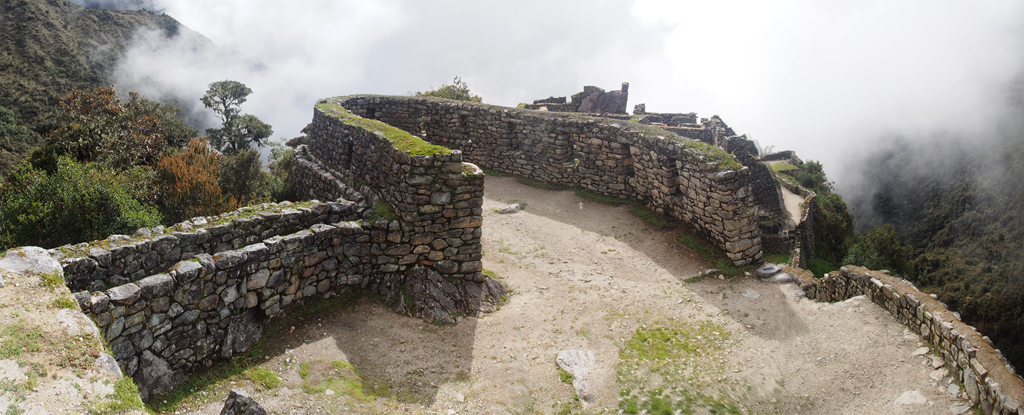
This ruin is located on a ledge with a very steep cliff on all sides.
It has a fountain system that runs around the outside in the wall in a narrow channel.
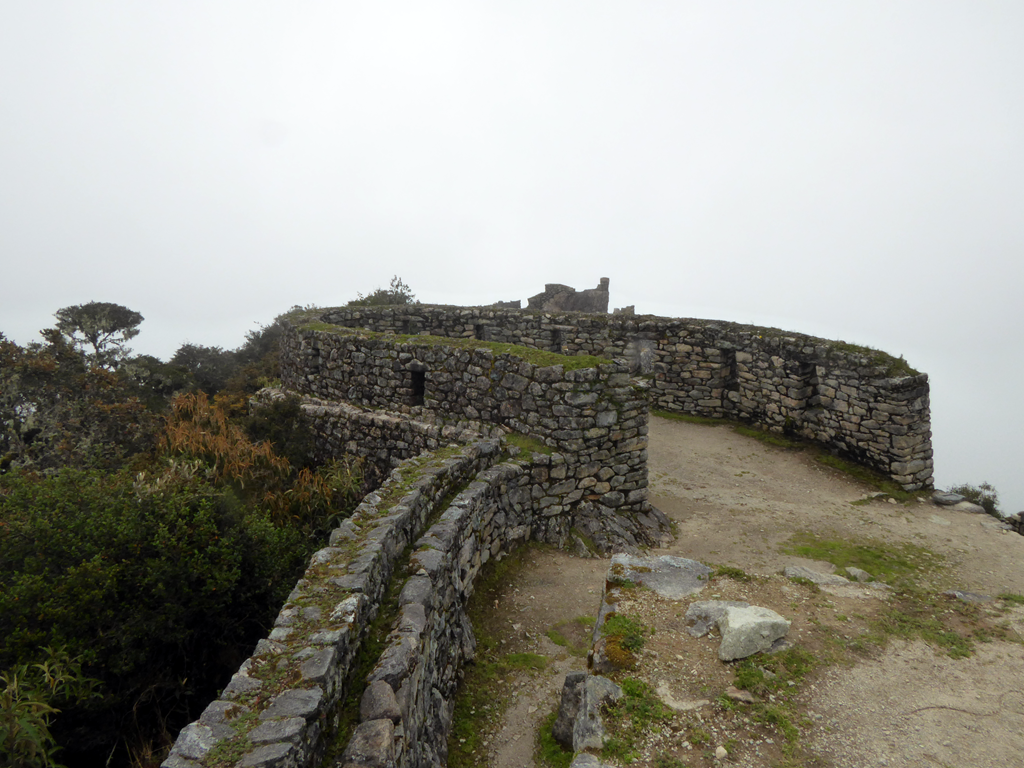
The aquaduct system that supplied the fountain is carved into the mountain and goes for over a mile to find a spring.
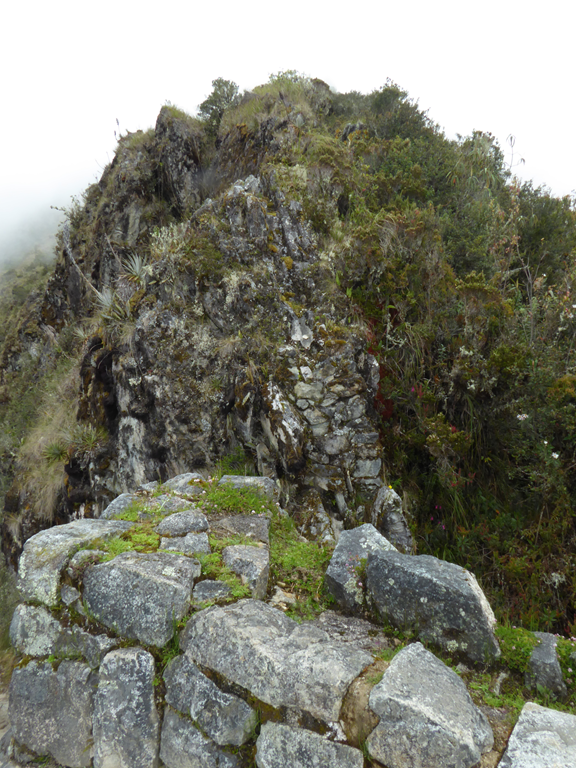
The purpose of this ruin is unknown. There is no farming anywhere nearby (other than the tiny Qunchamarka), and water had to be brought in from miles away, so it seems like an odd location. It probably served an administrative purpose.
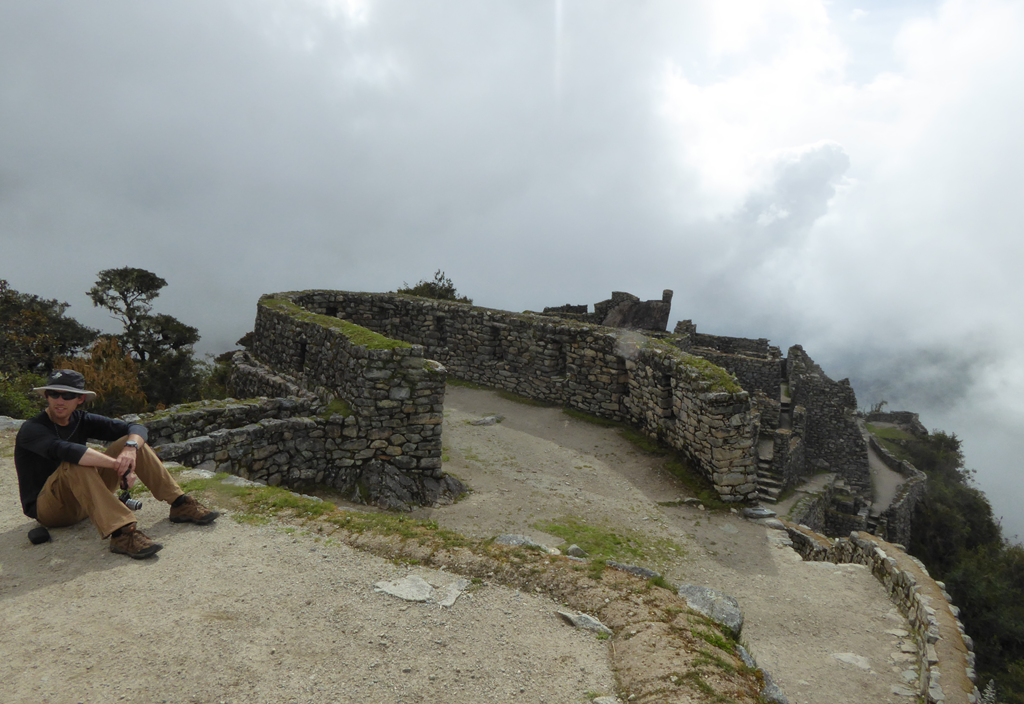
It also probably served as a place for travellers to stop for the night. The only load bearing animals available to the Incans were llamas, which can carry 10kg to 20kg (less than a porter!) but only for about 25km. Therefore they had to build places to stay overnight every 25km along the trail.
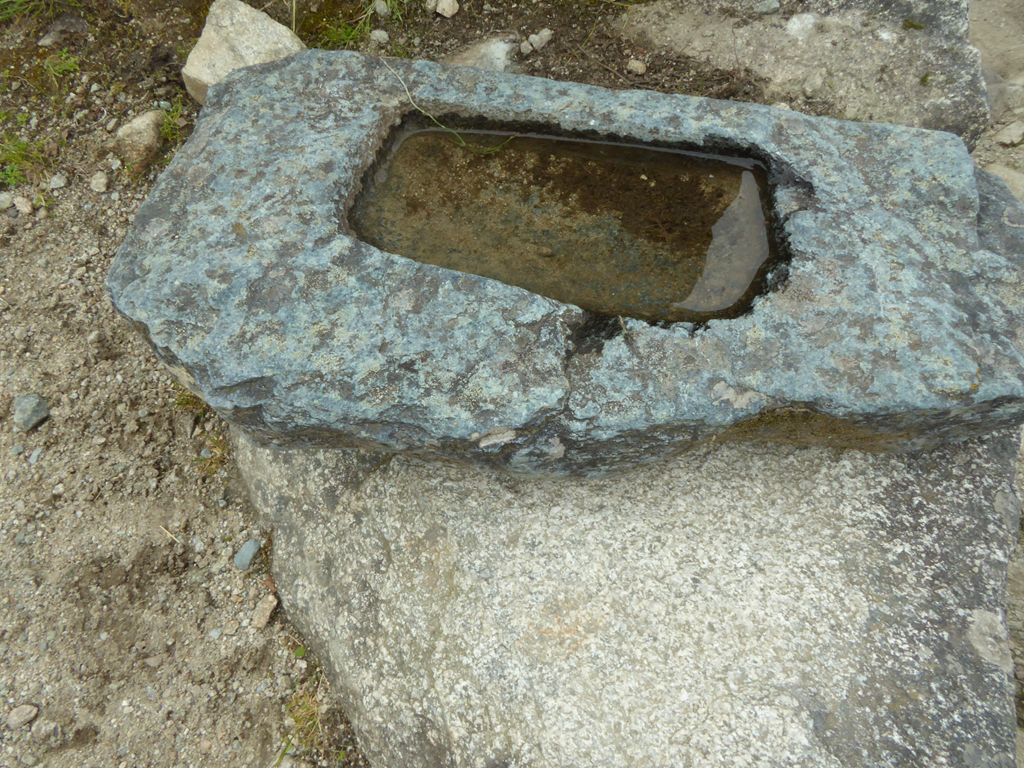
This rock has a hole carved in it to hold water. It was probably used as a mirror or a level.
Because it is surrounded by steep cliffs on all sides with only one entrance, it probably worked as a fortress in times of war.
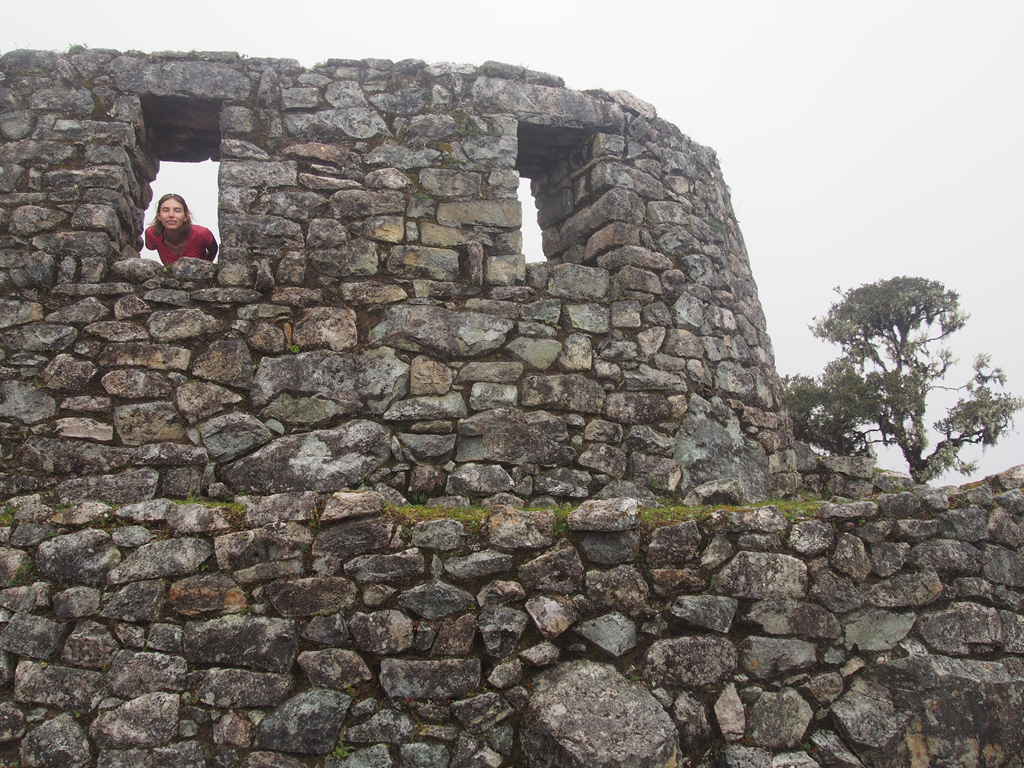
But several of the large rooms would have had to store food, and none seem to have the ventilation required.
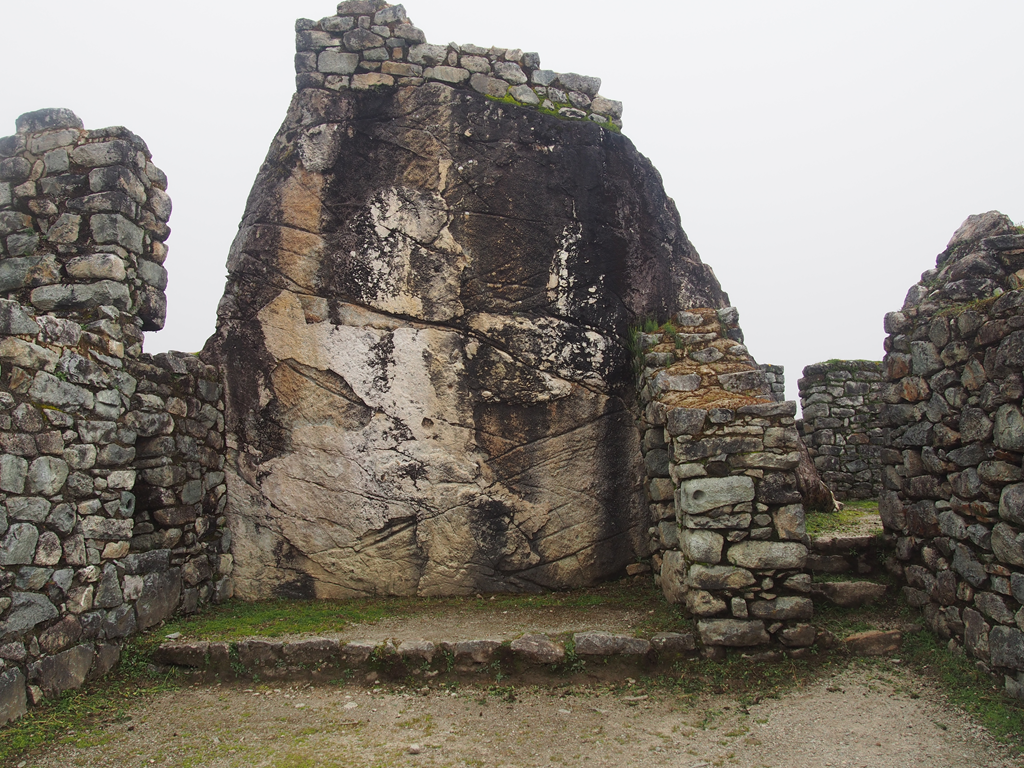
This giant rock probably served some kind of ceremonial purpose, but the masonry around it is the cheap kind so it couldn’t have been a very important temple.
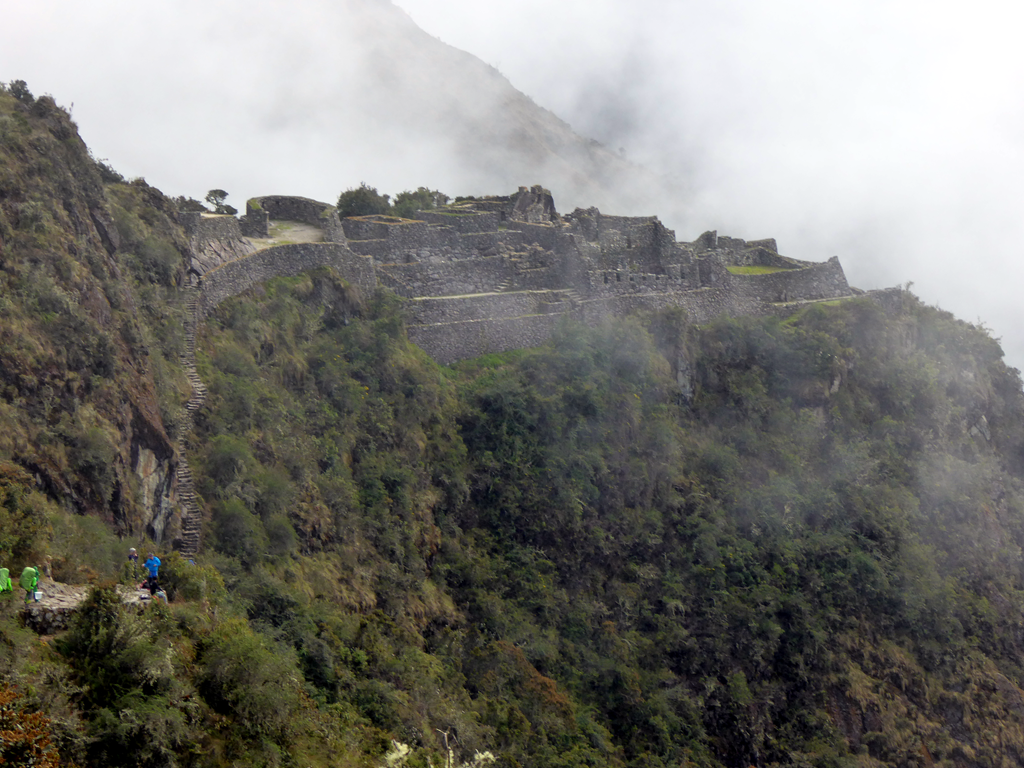
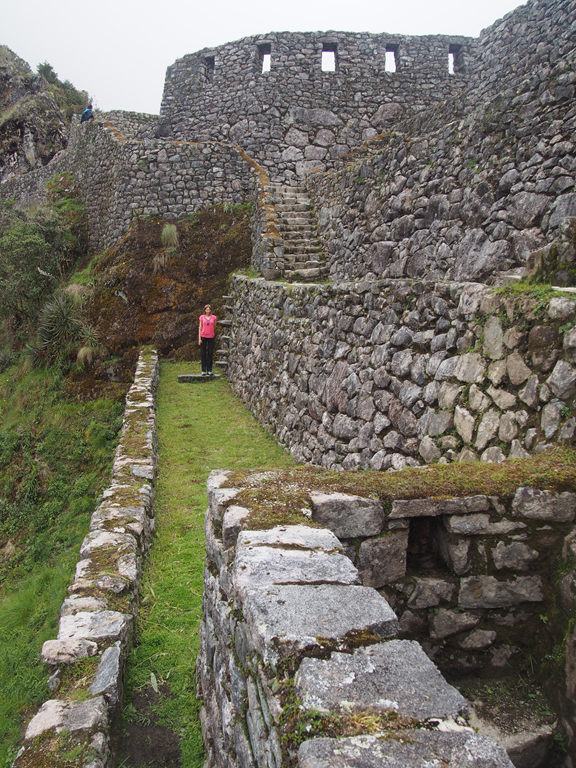
The site was huge with several levels built into the mountain top.
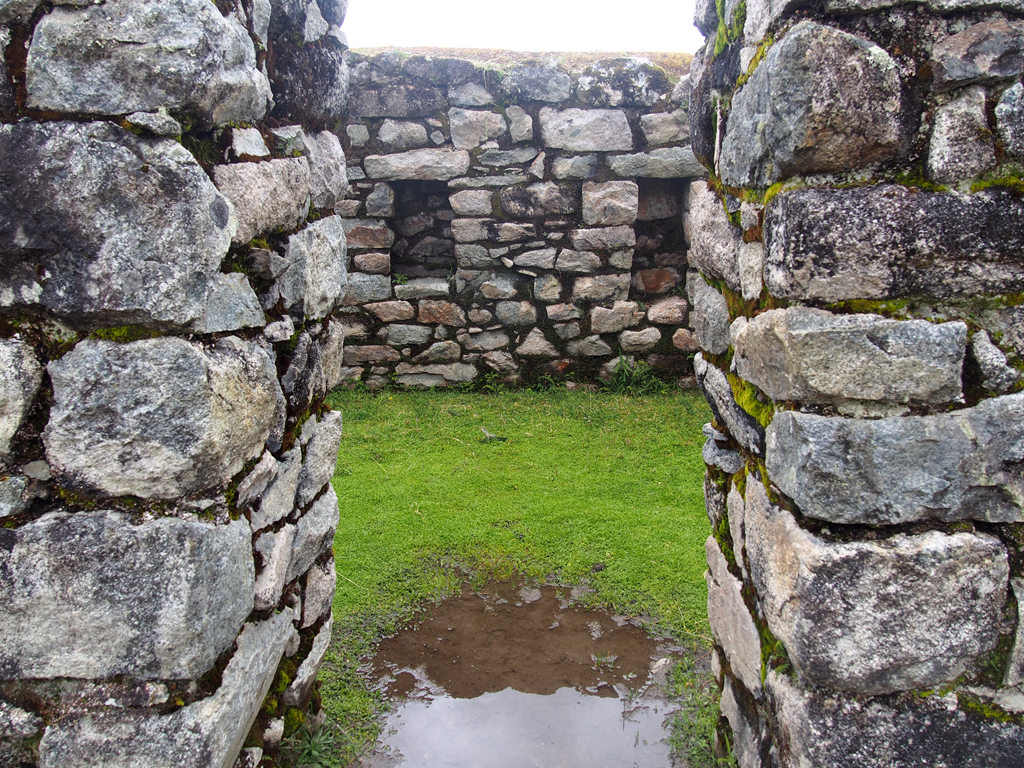
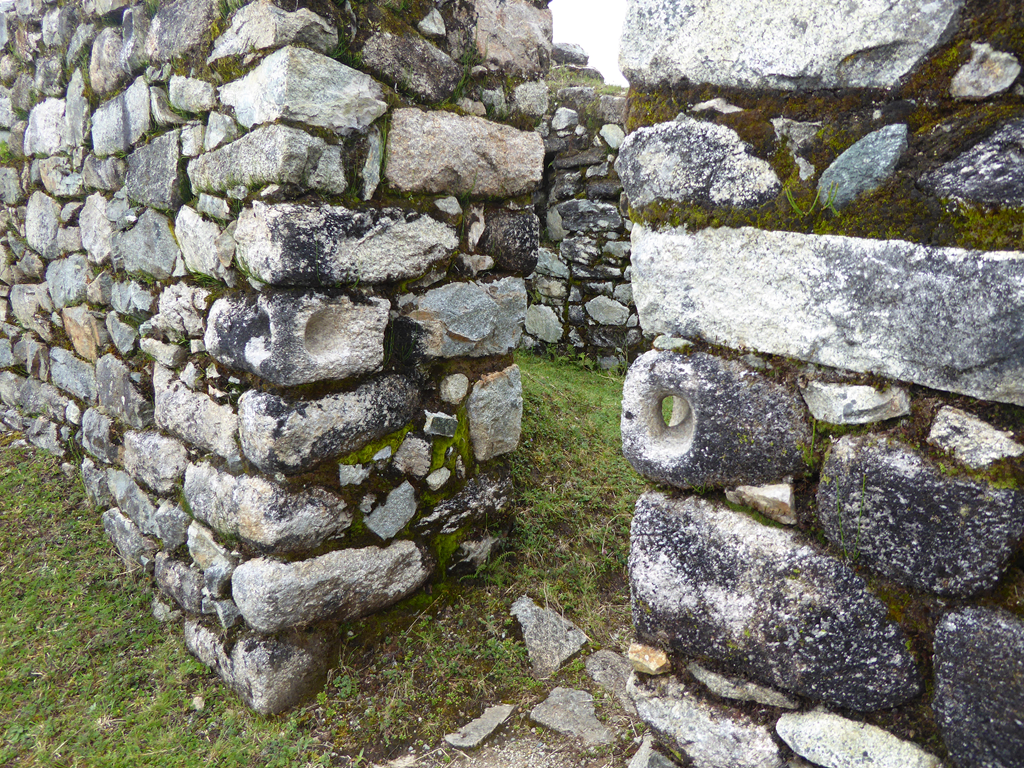
The doorways had holes for posts to hold the doors shut.
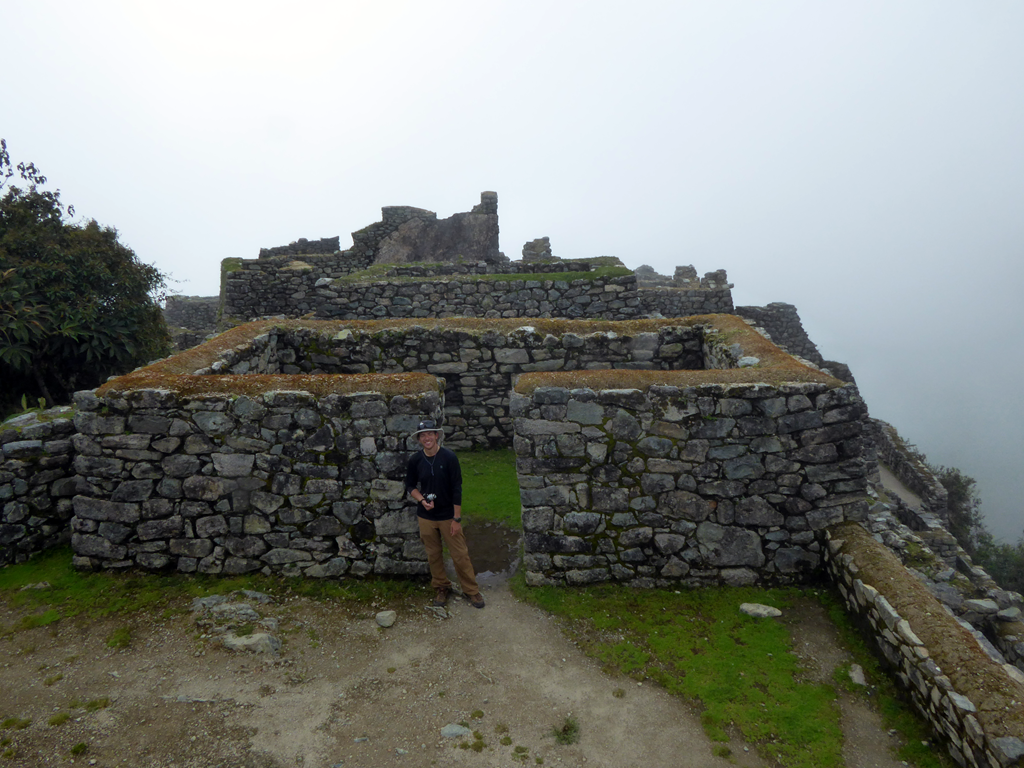
The site is so high up it is lost in clouds most of the time.